

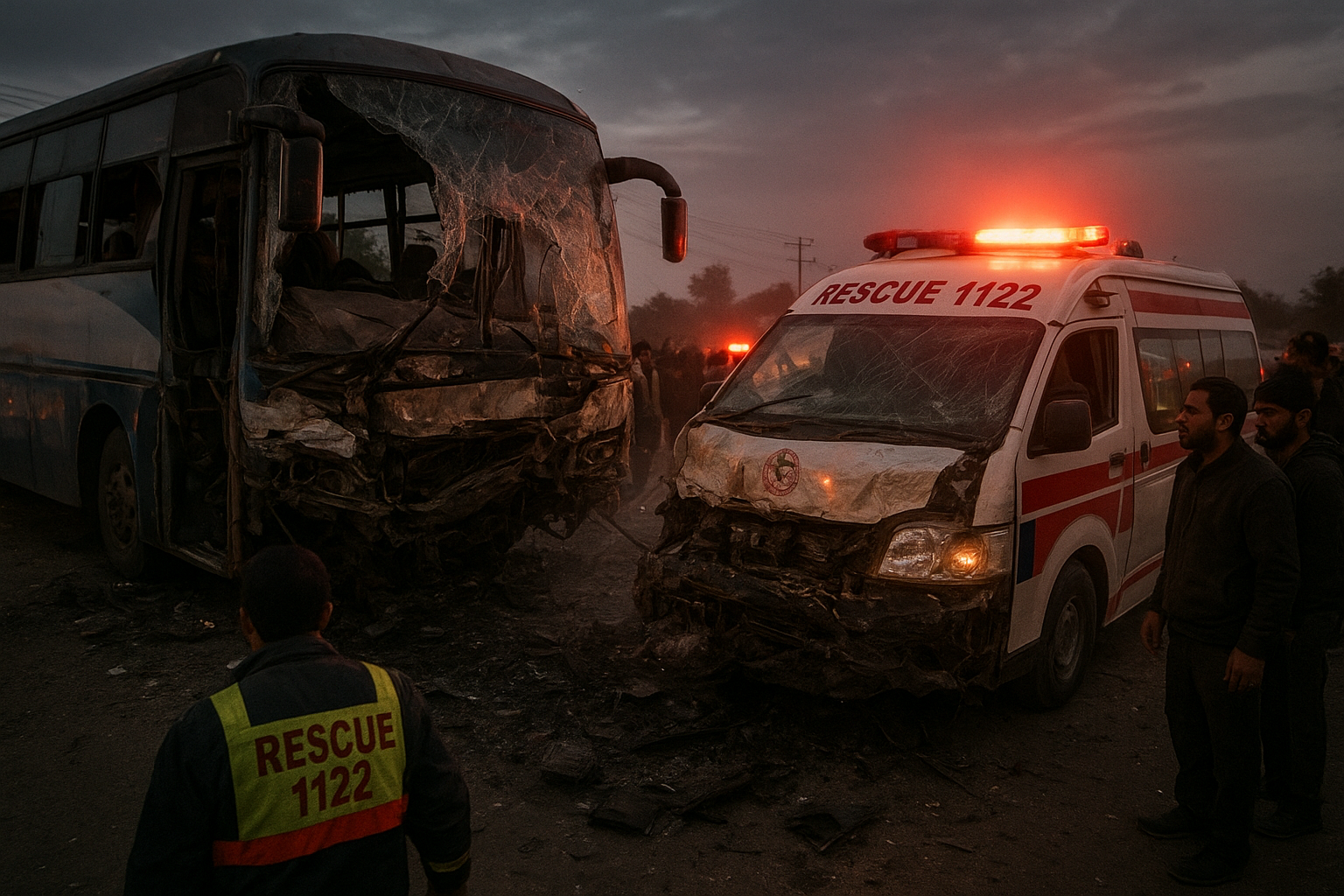
Rahim Yar Khan Accident: 6 Dead in Bus-Ambulance Crash
A devastating bus-ambulance crash occurred in Rahim Yar Khan, resulting in a tragic loss of life. The incident has sent shockwaves through the community, highlighting the risks associated with road accidents in Pakistan.

The Rahim Yar Khan accident has raised concerns about road safety in the region. According to reports, the collision involved a bus and an ambulance, resulting in six fatalities. The incident is a grim reminder of the need for improved road safety measures to prevent such tragedies in the future.
Key Takeaways
- A bus-ambulance crash in Rahim Yar Khan resulted in six deaths.
- The incident highlights the risks associated with road accidents in Pakistan.
- The Rahim Yar Khan accident has raised concerns about road safety in the region.
- Improved road safety measures are needed to prevent such tragedies.
- The incident is under investigation, with details emerging about the circumstances surrounding the crash.
Tragic Collision Details
The recent bus-ambulance crash in Rahim Yar Khan resulted in a tragic loss of life, with six people confirmed dead. This incident has sent shockwaves through the local community, raising concerns about the safety of road transport in the region.
Time and Location of the Accident
The accident occurred on a major highway near Rahim Yar Khan, a significant city in Punjab, Pakistan. Witnesses report that the collision happened during the morning rush hour, when roads were particularly congested.
Vehicles Involved
The vehicles involved were a public transport bus and an ambulance. The bus was carrying numerous passengers, while the ambulance was reportedly on its way to a medical emergency.
Initial Reports from the Scene
Initial reports indicate that the impact was severe, causing significant damage to both vehicles. Emergency services were quickly dispatched to the scene to rescue those trapped and provide medical assistance.
As one witness stated,
“It was a horrific scene; the collision was so intense that it was hard to recognize the vehicles.”
This eyewitness account highlights the severity of the crash and the shock it caused among onlookers.
The investigation into the cause of the accident is ongoing, with authorities examining factors such as road conditions, vehicle maintenance, and potential human error.
Understanding Rahim Yar Khan: Location and Context
The city of Rahim Yar Khan is a crucial hub in southern Punjab, Pakistan. It is known for its significant contribution to the region’s agriculture and economy.
Geographic Location in Pakistan
Rahim Yar Khan is situated in the southern part of Punjab, bordering the Sindh province. Its strategic location makes it a key intersection for trade and transportation.
Regional Significance
The district is a major agricultural producer, contributing substantially to Pakistan’s economy. Its fertile land and extensive irrigation system support various crops.
Transportation Infrastructure
Rahim Yar Khan’s transportation network connects it to major cities, facilitating the movement of goods and people. The region’s infrastructure plays a vital role in its economic activities.
Casualties and Victims
Tragically, the Rahim Yar Khan accident claimed several lives and injured many. The human toll of this tragic event continues to unfold as details emerge about those affected.
Identities of the Deceased
The identities of the deceased have been released, revealing a tragic loss of life among the passengers. The victims include individuals from various backgrounds, highlighting the widespread impact of the accident.
Injured Survivors
Several individuals were injured in the crash, with survivors being rushed to nearby medical facilities for treatment. The condition of the injured varies, with some reported to be in critical care.
Current Medical Status
The medical status of the injured survivors is being closely monitored by healthcare professionals. The treatment is focused on stabilizing their condition and addressing any life-threatening injuries.
Treatment Facilities
The injured were taken to local hospitals equipped to handle emergency care. These facilities are providing round-the-clock medical attention to the survivors.
Prognosis Reports
Prognosis reports indicate a guarded outlook for some of the critically injured survivors. Medical teams are working diligently to improve their chances of recovery.
The Rahim Yar Khan accident has left a profound impact on the community, with many coming together to support the victims and their families. As the investigation into the accident continues, the focus remains on providing aid and care to those affected.
Emergency Response Efforts
In the aftermath of the devastating collision, emergency responders sprang into action. Their prompt response was crucial in managing the aftermath of the accident.
First Responders at the Scene
The first responders, including police and rescue teams, arrived quickly at the scene. They worked efficiently to secure the area and provide initial medical assistance.
Rescue Operations
Rescue operations were conducted with precision, with teams using specialized equipment to free trapped victims. The operations were complicated by the severity of the crash.
Hospital Preparedness
Hospitals in Rahim Yar Khan were put on high alert, preparing for the influx of injured patients. The preparedness of medical staff was critical in providing immediate care.
Medical Resources Deployed
Additional medical resources, including emergency vehicles and personnel, were deployed to support the response efforts. This ensured that patients received the necessary care in a timely manner.
| Resource | Quantity Deployed | Purpose |
|---|---|---|
| Ambulances | 5 | Transporting injured patients |
| Medical Personnel | 20 | Providing on-site and hospital care |
| Emergency Equipment | Multiple units | Rescue and medical support |
Eyewitness Accounts and Testimonies
Survivors and bystanders alike shared their experiences of the Rahim Yar Khan accident, painting a vivid picture of the disaster. The collision between the bus and the ambulance was described as a chaotic and terrifying event.
Statements from Bystanders
Bystanders who witnessed the accident provided crucial eyewitness accounts. One bystander described the moment of impact: “The sound was deafening. It was like a loud crash followed by screams.“
Another witness stated, “The ambulance was speeding, and it seemed like it didn’t stop at the intersection before colliding with the bus.”
Passenger Experiences
Passengers on the bus shared their harrowing experiences. One survivor recounted, “I was thrown off my seat upon impact. It was a moment of sheer panic as people were crying for help.”
First Responder Perspectives
First responders at the scene provided a stark description of the accident’s aftermath. A rescue worker noted, “The severity of the crash was evident from the damage to both vehicles.”
Emergency responders worked tirelessly to rescue those trapped in the wreckage, providing critical care to the injured.
The eyewitness accounts and testimonies from the Rahim Yar Khan accident underscore the tragic nature of the event and highlight the importance of road safety measures.
Rahim Yar Khan Accident:6 Dead in Bus-Ambulance Crash – Investigation Updates
A thorough investigation is underway following the deadly bus-ambulance crash in Rahim Yar Khan. The authorities are working diligently to determine the cause of the accident and identify those responsible.
Police Statements and Official Reports
The police have released initial statements regarding the crash, highlighting the severity of the collision. Official reports indicate that the investigation is focusing on multiple factors, including vehicle condition and driver behavior.
Preliminary Findings
Preliminary findings suggest that the bus and ambulance were traveling at high speeds when the collision occurred. Further analysis is needed to confirm these findings and understand their implications.
Ongoing Investigation Efforts
The investigation is ongoing, with authorities collecting evidence and interviewing witnesses. Evidence collection is a critical aspect of this process.
Evidence Collection
Investigators are gathering physical evidence from the crash site, including debris and vehicle parts. This evidence will be analyzed to help determine the cause of the accident.
Expert Analysis
Expert analysis is being conducted to assess the condition of the vehicles involved and the potential role of human error. This analysis will provide valuable insights into the circumstances surrounding the crash.

The investigation into the Rahim Yar Khan accident is complex and multifaceted. As more information becomes available, it is likely that the findings will shed light on the factors that contributed to this tragic event.
Analyzing Potential Causes of the Collision
The devastating bus-ambulance crash in Rahim Yar Khan prompts an in-depth analysis of its underlying causes. To understand the factors that contributed to this tragic accident, it’s essential to examine various aspects.
Road Conditions and Infrastructure
The condition of the roads in Rahim Yar Khan is a critical factor in analyzing the accident. Poorly maintained roads can lead to hazardous driving conditions. Key issues include:
- Potholes and uneven road surfaces
- Inadequate lighting
- Lack of proper signage
These factors can significantly increase the risk of accidents, especially at night or during adverse weather conditions.
Vehicle Maintenance Factors
The maintenance status of the vehicles involved is another crucial aspect. Regular maintenance is vital to ensure that vehicles are in good working condition. Factors to consider include:
- Regular servicing of brakes and tires
- Checking for mechanical faults
- Ensuring compliance with safety standards
Neglecting these maintenance tasks can lead to vehicle failure, potentially causing accidents.
Human Error Considerations
Human error is a significant contributor to many road accidents. In the case of the Rahim Yar Khan collision, factors such as driver fatigue, speeding, or reckless driving may have played a role.
Driver Training and Licensing
The training and licensing of drivers are critical in preventing accidents caused by human error. Ensuring that drivers are properly trained and licensed can reduce the risk of such incidents.
Government and Official Responses
Government and official responses to the Rahim Yar Khan accident have been swift, with assurances of support for the victims’ families. The tragedy has prompted a unified response from local and provincial authorities.
Local Administration Statements
The local administration has been at the forefront of the response efforts. Officials have visited the accident scene, directing rescue operations and ensuring that medical aid is provided to those in need. “We are committed to providing all necessary support to the families affected by this tragedy,” stated a local administration official.
Provincial Government Actions
The provincial government has also taken decisive action, initiating an investigation into the cause of the accident.
“Our priority is to ensure that the victims’ families receive the support they need during this difficult time,”
said a provincial government spokesperson.
Support Measures for Victims’ Families
Support measures are being implemented to aid the families of the victims. These include financial assistance, medical support, and counseling services. The government has assured that these measures will be continued until the families are back on their feet.
Similar Accidents in the Region: A Pattern of Concern
The tragic bus-ambulance crash in Rahim Yar Khan is part of a larger pattern of transportation accidents in the region. This pattern raises significant concerns about the safety of road travel in the area.

Recent Transportation Accidents
Over the past few years, the region around Rahim Yar Khan has witnessed a disturbing number of transportation accidents. These incidents have involved various types of vehicles, including buses, trucks, and ambulances, often resulting in significant loss of life.
For instance, just last year, a major bus crash occurred on the highway connecting Rahim Yar Khan to a neighboring city, resulting in multiple fatalities. Such incidents highlight the urgent need for improved road safety measures.
Common Factors in Regional Crashes
Analyzing these accidents reveals several common factors contributing to the crashes. Poor road conditions and inadequate vehicle maintenance are frequently cited as primary causes. Additionally, human error, including reckless driving and speeding, plays a significant role.
- Poor road infrastructure
- Inadequate vehicle maintenance
- Reckless driving and speeding
Statistical Trends
Statistical data on road accidents in the region paints a concerning picture. According to recent reports, there has been an upward trend in the number of accidents and fatalities on the roads around Rahim Yar Khan.
| Year | Number of Accidents | Fatalities |
|---|---|---|
| 2021 | 50 | 200 |
| 2022 | 60 | 250 |
| 2023 | 70 | 300 |
The increasing number of accidents and fatalities underscores the need for immediate action to address the underlying causes and improve transportation safety in the region.
Pakistan’s Road Safety Crisis: A Broader Perspective
Pakistan faces a severe road safety crisis, with accidents causing thousands of deaths annually. The recent tragic collision in Rahim Yar Khan is a grim reminder of this ongoing issue.
National Accident Statistics
Pakistan’s road accident statistics are alarming. According to recent data, the country witnesses a significant number of road accidents each year, resulting in a high number of fatalities and injuries. The National Highway Authority and other related bodies have reported these statistics, highlighting the need for immediate action to improve road safety.
Ambulance Safety Protocols
Ambulance safety is a critical aspect of the overall road safety crisis. Ensuring that ambulances are properly maintained and that personnel are trained to follow safety protocols can significantly reduce the risk of accidents involving emergency vehicles. Regular maintenance checks and strict adherence to traffic laws are essential components of ambulance safety protocols.
Public Transportation Regulations
Public transportation plays a vital role in Pakistan’s transportation infrastructure. Effective regulations and their enforcement are crucial to ensuring the safety of passengers. This includes regular inspections of public vehicles, adherence to safety standards, and penalties for violations.
Enforcement Challenges
One of the significant challenges in improving road safety in Pakistan is the enforcement of existing regulations. Corruption, lack of resources, and inadequate training can hinder effective enforcement. Strengthening institutions and improving training for law enforcement agencies are critical steps toward addressing these challenges.
The road safety crisis in Pakistan requires a multifaceted approach, including better enforcement of traffic laws, improved vehicle safety standards, and enhanced public awareness campaigns. By addressing these areas, Pakistan can work towards reducing the number of road accidents and fatalities.
Proposed Safety Improvements to Prevent Future Tragedies
Enhancing road safety in Rahim Yar Khan requires a multifaceted approach to prevent tragedies like the recent bus-ambulance crash. To achieve this, several key areas need to be addressed.
Infrastructure Development Needs
Improving the region’s infrastructure is crucial. This includes upgrading road conditions, enhancing lighting, and installing safety barriers on high-risk routes.
Vehicle Safety Standards
Strengthening vehicle safety standards is another vital aspect. Regular maintenance checks, strict adherence to safety regulations, and modernizing the vehicle fleet can significantly reduce accident risks.
“Regular vehicle inspections are crucial in preventing accidents caused by mechanical failures.” –
Transport Safety Expert
Driver Education and Enforcement
Enhancing driver education programs and enforcing traffic laws more effectively can also mitigate risks. This includes training drivers in defensive driving techniques and ensuring compliance with traffic regulations.
International Best Practices
Adopting international best practices, such as advanced driver-assistance systems (ADAS) and smart traffic management systems, can further enhance safety. Countries with robust road safety records offer valuable lessons.
| Safety Measure | Description | Benefit |
|---|---|---|
| Infrastructure Upgrades | Improving road conditions and safety features | Reduced accident risk |
| Regular Vehicle Checks | Ensuring vehicles are roadworthy | Prevents mechanical failure accidents |
| Driver Training | Enhancing driver skills and awareness | Improved road safety |
By implementing these safety improvements, Rahim Yar Khan can significantly reduce the risk of future road accidents, creating a safer environment for all road users.
Conclusion
The tragic collision between a bus and an ambulance in Rahim Yar Khan, resulting in six fatalities, serves as a stark reminder of the vulnerabilities on Pakistan’s roads. As the investigation into the Rahim Yar Khan accident continues, it is clear that improving road safety is crucial.
Enhancing vehicle safety standards, improving road infrastructure, and enforcing strict driver regulations are essential steps toward preventing such tragedies. The Rahim Yar Khan accident conclusion is a call to action for the government and citizens to work together to address the road safety crisis in Pakistan.
By prioritizing road safety and implementing effective measures, Pakistan can reduce the number of accidents and ensure safer transportation for its citizens. The road to improved road safety begins with acknowledging the challenges and working collaboratively to overcome them.
FAQ
What was the Rahim Yar Khan accident?
The Rahim Yar Khan accident was a tragic collision between a bus and an ambulance that resulted in 6 deaths.
Where did the Rahim Yar Khan accident occur?
The accident occurred in Rahim Yar Khan, a city located in the province of Punjab, Pakistan.
What were the vehicles involved in the accident?
The vehicles involved were a bus and an ambulance.
How many people died in the Rahim Yar Khan accident?
6 people lost their lives in the tragic collision.
What is the significance of Rahim Yar Khan?
Rahim Yar Khan is a significant city in the region due to its geographic location and transportation infrastructure.
What are the common factors in regional transportation accidents?
Common factors include road conditions, vehicle maintenance, and human error.
What is being done to improve road safety in Pakistan?
Efforts include infrastructure development, enhancing vehicle safety standards, and improving driver education and enforcement.
What are the national accident statistics in Pakistan?
Pakistan faces a significant road safety crisis, with a high number of accidents occurring annually.
How can future tragedies like the Rahim Yar Khan accident be prevented?
Preventing such tragedies requires a multi-faceted approach, including infrastructure development, vehicle safety standards, and driver education.
What support measures are being provided to the victims’ families?
The government and local administration have implemented support measures for the families of the victims.
What is the current status of the investigation into the Rahim Yar Khan accident?
The investigation is ongoing, with police statements and official reports being released.
tag:
ambulance collision Pakistan breaking news Rahim Yar Khan bus ambulance collision bus crash Rahim Yar Khan fatal road accident Pakistan Pakistan accident update Pakistan road accident Pakistan traffic crash Rahim Yar Khan Accident Rahim Yar Khan bus crash Rahim Yar Khan latest news Rahim Yar Khan news Rescue 1122 accident road safety Pakistan tragic accident PakistanShare:

EHubServices

