

The Future of Work: How AI and Humans Will Thrive Together
Future of Work
Table of Contents
Introduction
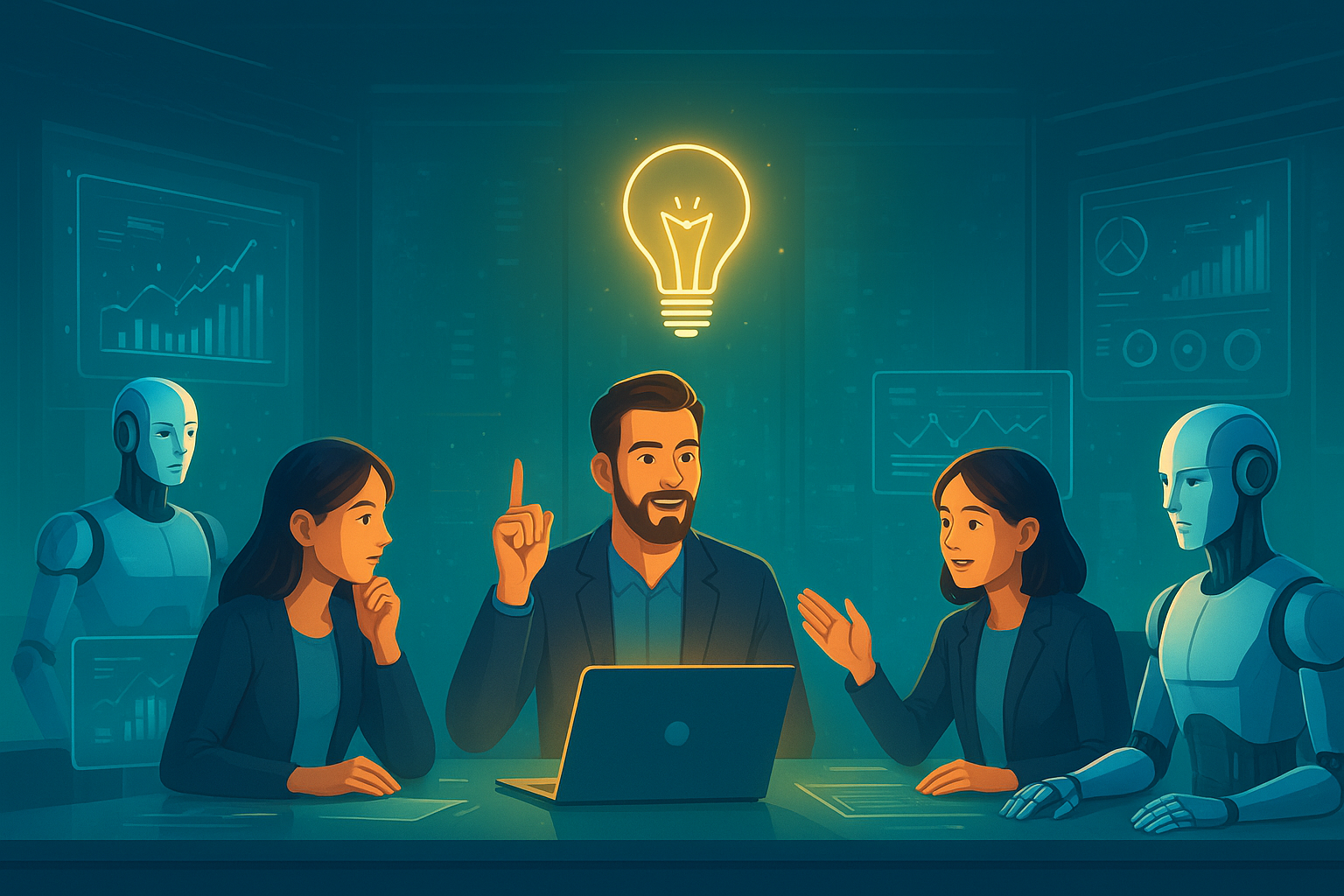
Imagine walking into your office in 2035. Instead of shuffling through emails, an AI assistant briefs you on the day, filters out irrelevant information, and even suggests the best time for breaks. The future of work isn’t about humans being replaced—it’s about humans and AI thriving together.

Understanding the AI Revolution
What is AI in the workplace?
Artificial Intelligence (AI) refers to machines that can learn, analyze, and assist in decision-making. In the workplace, it means tools that automate repetitive tasks, enhance efficiency, and support human creativity.
Evolution of AI: From automation to collaboration
Initially, AI was about automation—machines taking over repetitive, manual work. Today, AI is shifting toward collaboration, where humans and machines share responsibilities, each complementing the other’s strengths.
AI and Human Synergy

Humans as creators, AI as enhancers
Humans bring imagination, emotions, and complex problem-solving. AI brings speed, precision, and data-driven insights. Together, they create a balance.
Complementary strengths
Think of AI as the engine and humans as the driver. One without the other doesn’t go far.
The Future Workplace Landscape
AI in remote and hybrid work models
AI-powered project management tools, smart scheduling, and automated reporting make remote collaboration seamless.
Virtual collaboration powered by AI
From AI-generated meeting summaries to real-time language translation, AI will redefine global teamwork.
AI in Different Industries
Healthcare
AI can detect diseases early, but doctors provide the empathy and trust patients need.
Finance
AI analyzes markets in seconds, while human advisors build client relationships.
Education
AI tutors personalize learning paths, while teachers inspire curiosity.
Manufacturing
Smart robots handle repetitive tasks, while humans oversee quality and innovation.
Retail
AI predicts customer needs, but salespeople deliver personalized service.
Job Transformation vs. Job Loss

Will AI replace jobs?
Some routine jobs may disappear, but history shows technology creates new roles too.
New roles emerging
Expect new careers in AI ethics, data analysis, and human-AI collaboration management.
Essential Skills for the AI Era
- Emotional intelligence – Machines can’t replicate genuine empathy.
- Critical thinking – Humans must question AI’s outputs.
- Creativity – Innovation comes from human imagination.
- Tech literacy – Understanding AI tools will be a must.
AI-Powered Productivity Tools
Automation software
Removes repetitive tasks like scheduling or report generation.
Intelligent assistants
AI chatbots and virtual assistants free up time for meaningful work.
Data-driven decision making
AI helps spot patterns humans might miss.
Ethical Considerations in AI and Work
- Fairness and bias – AI decisions must be monitored for discrimination.
- Data privacy – Protecting employee and customer data is vital.
- Human accountability – Final decisions should remain human-led.
The Human Edge in the AI World
AI may be powerful, but humans excel in areas like:
- Empathy and relationships
- Leadership and vision
- Cultural and creative contributions
Reskilling and Lifelong Learning
The AI era demands continuous learning. Platforms like Coursera, Udemy, and LinkedIn Learning are making upskilling accessible.
AI for Work-Life Balance
By taking over mundane tasks, AI allows humans to focus on creativity, strategy, and personal growth. Imagine reclaiming hours each week just by delegating routine chores to AI.
Challenges Ahead
- Resistance to change – Some workers may fear AI.
- Economic inequality – Not all companies or countries will adopt AI at the same pace.
Future Scenarios: Humans and AI Together
- Optimistic outlook – Humans and AI will form dream teams.
- Balanced coexistence – Machines handle data, humans handle meaning.
Conclusion
The future of work is not a battle between humans and AI—it’s a partnership. When humans bring empathy and creativity while AI contributes speed and precision, we unlock a future where work becomes more meaningful, productive, and innovative. The real magic happens when humans and AI thrive together.
FAQs
1. Will AI take away all human jobs?
No, AI will replace some repetitive jobs but also create entirely new opportunities.
2. What jobs are safe from AI?
Roles requiring empathy, leadership, and creativity will remain in human hands.
3. How can I prepare for the AI-powered future of work?
Focus on continuous learning, emotional intelligence, and tech literacy.
4. Can AI work without humans?
AI needs human guidance, ethical oversight, and creative input to function effectively.
5. Is AI good or bad for the workplace?
It depends on how we use it. Managed well, AI can boost productivity and create a more balanced work environment.
tag:
AI 2025 AI and jobs AI for business AI future AI future predictions AI in education AI innovations AI technology artificial intelligence daily life artificial intelligence in healthcare artificial intelligence trends future of artificial intelligence future technology how AI is changing lives impact of AIShare:

EHubServices

